
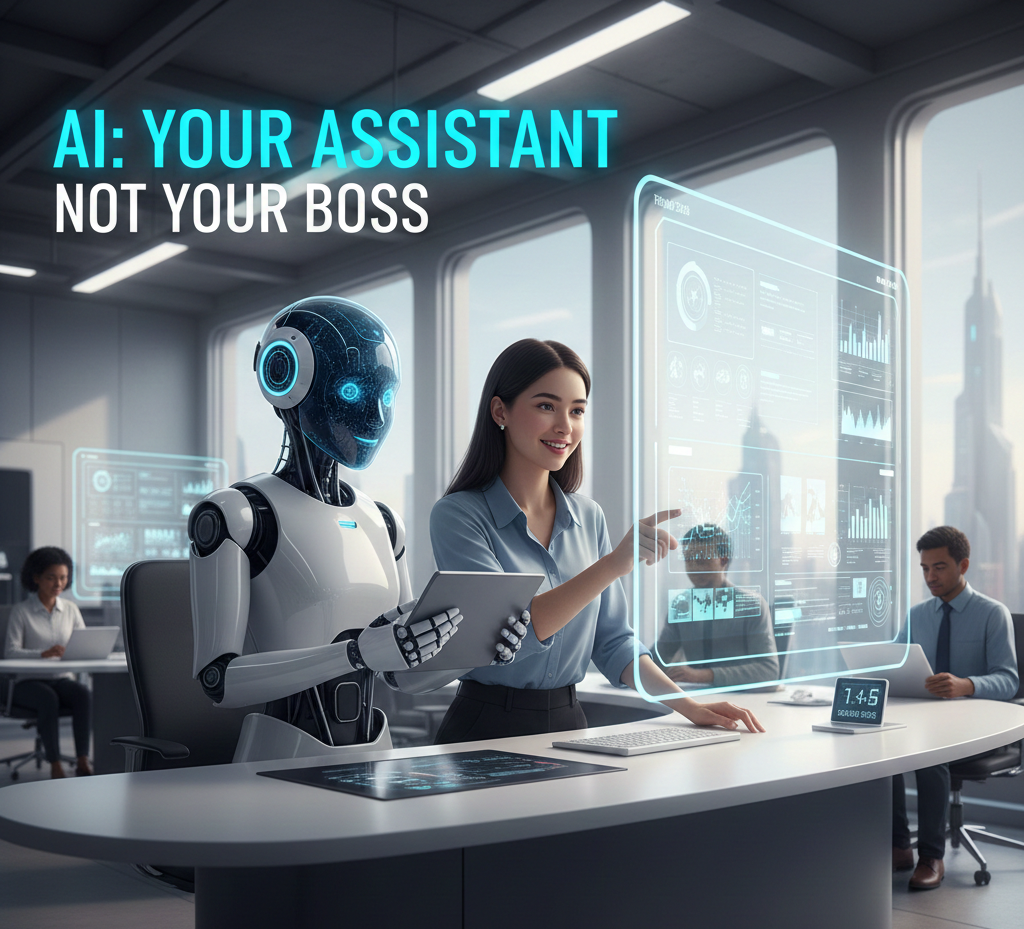
In today’s professional world, the conversation around Artificial Intelligence often swings between two extremes. Some believe AI will replace everything. Others reject it entirely. The truth, however, sits in a far more practical and powerful middle ground.
AI is an incredible productivity tool. But there is a critical difference between using AI as an assistant and becoming dependent on it. The professionals who thrive are not the ones who surrender control to AI, but those who know how to lead it.
From Library Stacks to Instant Data
To understand where we are today, it helps to look at where we started.
Not long ago, research was a slow, manual, and exhausting process.
- The Library Era
Knowledge meant physically searching through books, journals, and archives. - The Early Search Engine Era
Research involved opening dozens of browser tabs, copying paragraphs into documents, and manually organizing ideas. - The AI Era
What once took hours of searching, reading, and synthesizing can now be done in seconds.
This shift is massive. But here’s the key point: AI prepares the ingredients, not the meal. The kitchen hand can chop and prep, but the head chef must still know the recipe.

The “Boss Role” vs. the “Monkey with a Sword”
There is a dangerous point where assistance quietly turns into dependency.
If you use AI to move faster in areas where you already have expertise, you stay in control. You are the boss.
If you use AI to replace your understanding, you risk losing control entirely.
As the saying goes:
If you don’t have an underlying understanding, AI is like a monkey with a sword in its hand. It can do anything, including the wrong thing.
When you can no longer judge whether the output is correct, the assistant becomes the boss. That’s where productivity turns into risk.
To stay in charge, every AI output must pass through three essential filters.

The Three Filters Every Professional Must Apply
1. Communication
You must know how to ask the right questions. Poor input leads to poor output, no matter how advanced the tool is.
2. Judgment
AI can generate answers, but only you can evaluate whether they make sense within your context, goals, and experience.
3. Common Sense
Technology fails. Systems glitch. Logic breaks.
We’ve all seen examples:
- A cashier missing an obvious pricing error.
- A student reaching for a calculator to solve 12 + 12.
When basic skills fade, small failures turn into big problems.
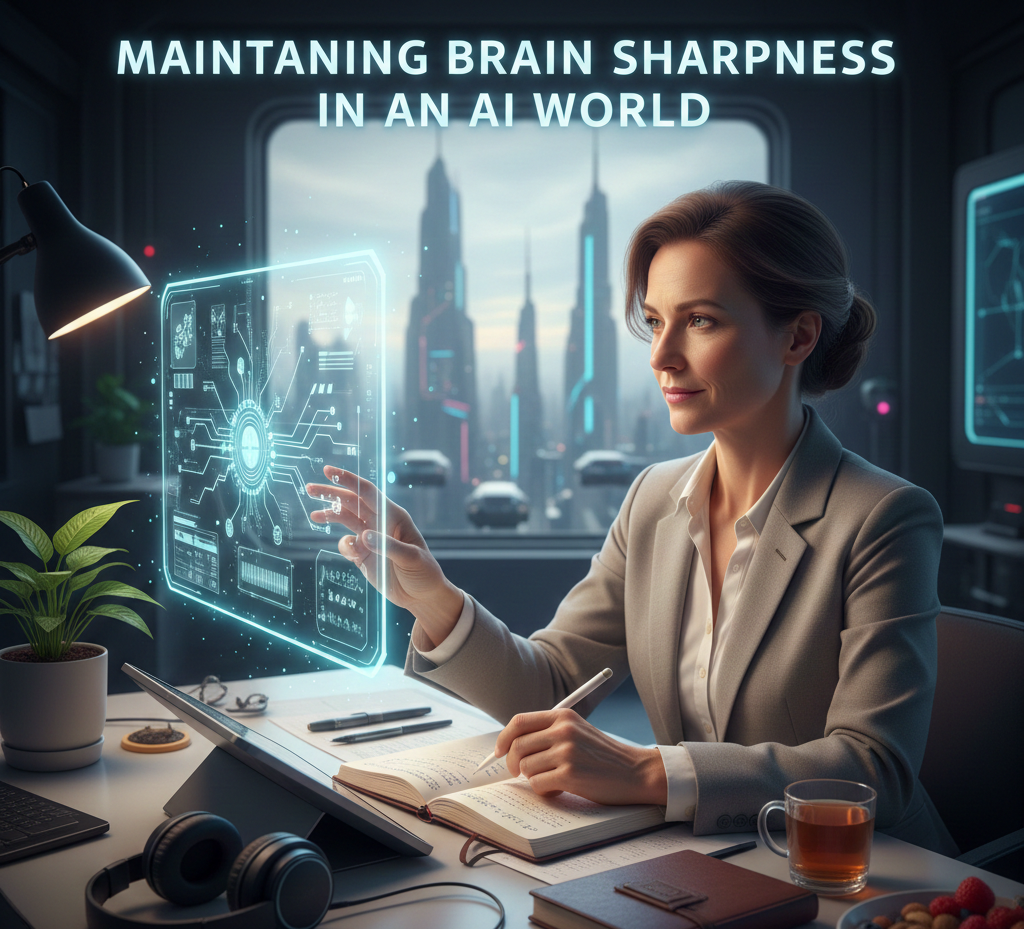
Maintaining Your Brain Sharpness in an AI World
Advanced tools should enhance intelligence, not replace it. That means holding onto fundamentals.
- Know the “HTML”
Modern websites can be built without writing code, but knowing the basics allows you to fix issues when automation fails. - The Power of the Pen
There are moments when writing by hand is faster, clearer, and more effective than any device. - Search vs. AI
AI is powerful, but traditional search engines still win in certain scenarios, especially for real-time, niche, or highly specific information.
The smartest professionals know when to switch tools instead of blindly trusting one.
Final Thoughts: Don’t Lose the Track
True productivity is not about doing less thinking. It’s about doing more meaningful work in less time.
Be addicted to progress, not the tool.
Use AI to automate the repetitive and mundane, but never surrender your role as the decision-maker.
Keep your fundamentals strong. Keep your judgment sharp.
Remember, AI exists to serve your vision, not define it.
Stay the boss.
#ArtificialIntelligence #AIProductivity #FutureOfWork #SmartWork #DigitalTransformation #AIinBusiness #TechLeadership #HumanIntelligence #AItools #ProfessionalGrowth #WorkSmarter #TechEthics #AIAssistant #InnovationMindset #KnowledgeEconomy #ProductivityHacks #CriticalThinking #ModernWorkplace