
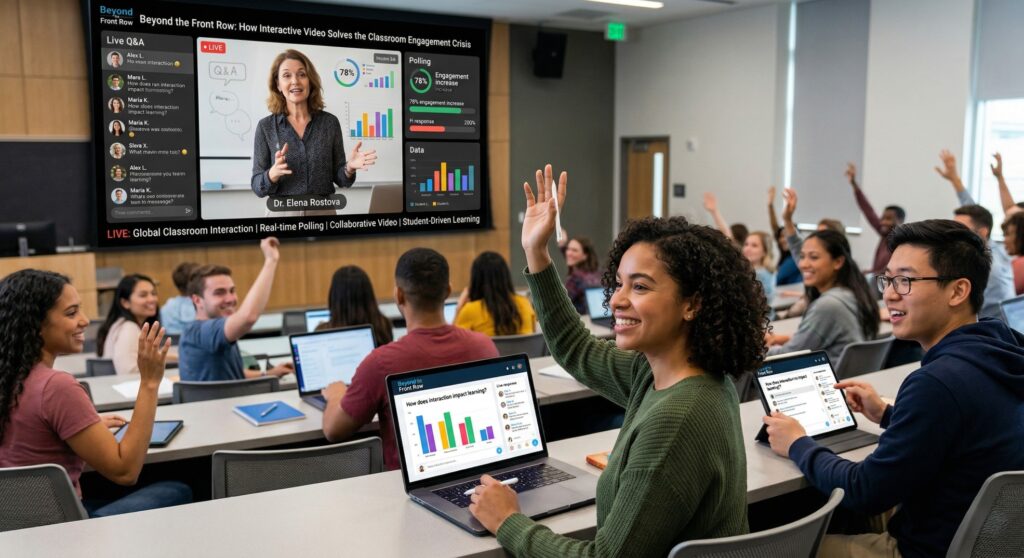
Introduction: The Illusion of Understanding
Imagine standing in front of a class of 30 students. You’ve just finished explaining a complex topic and, with a hopeful smile, you ask, “Does everyone understand?” A few enthusiastic hands shoot up from the front row. You nod, feeling a sense of accomplishment, and move on.
But what about the rest of the class? The quiet students in the middle, the ones seemingly absorbed in their notes, the one who looks hopelessly lost in the back corner? Did they truly understand, or are they simply going with the flow, too intimidated or indifferent to speak up?
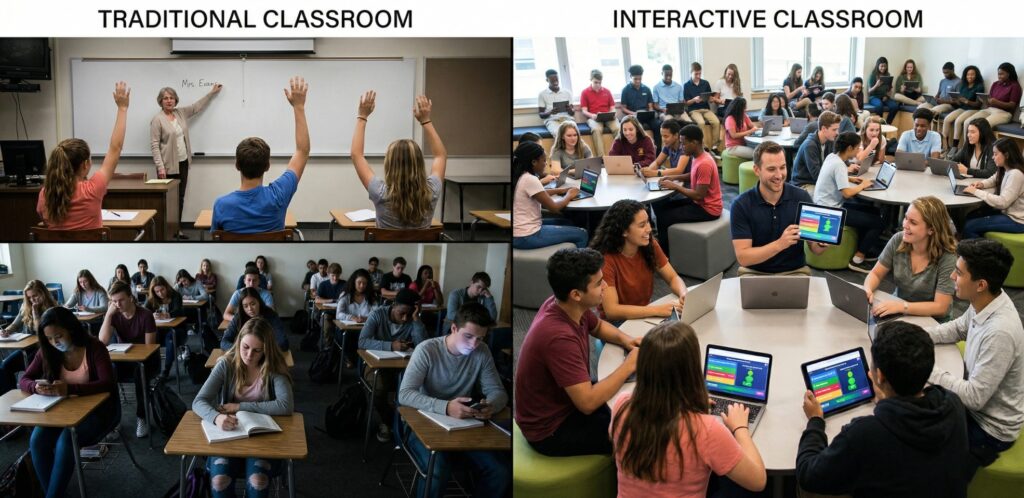
This is the silent crisis of classroom engagement. In the traditional lecture format, we often rely on a handful of extroverted students to represent the comprehension of the entire group. This creates an “illusion of understanding” that masks widespread confusion and leaves many learners behind.
The Limitations of the Traditional Model
Think back to the questions we frequently ask during a lesson. They often check for basic recall: “Who knows the answer?” “Can someone explain that again?” The responses we get are filtered through the personalities and confidence levels of a few students.
- The Extrovert Bias: Extroverted students thrive on public participation and receive immediate feedback. But brilliant yet introverted thinkers—our “backbenchers”—are often left in the dark. Their contributions, especially deeper reflections and open-ended questions, are lost.
- The Silent Majority: The time pressure of a standard class means we can’t ask everyone a question. We end up relying on the same few responders. The vast majority of the class remains passive observers, and we never truly grasp their individual level of understanding.
- The Absentee Gap: When a student misses a lesson, their only option is often to borrow notes from a fellow classmate. Notes are a poor substitute. They are fragmented, lack context, and miss the interactive nuance of a lived explanation. Borrowed notes provide a superficial verdict, not comprehension.
This system might work for mass learning, but it utterly fails comprehensive based learning—the guarantee that every student achieves mastery.
The Solution: Making Lessons Interactive
We need a way to break this dynamic, to ensure that every student is actively participating and that we have real-time data on their progress. The answer isn’t just adding more classroom questions; it’s about strategically integrating technology to scale engagement and feedback.
The Power of Interactive Video Lessons
Imagine transforming your passive lectures into dynamic, interactive video lessons. This isn’t just about recording your talk; it’s about weaving critical checkpoints directly into the learning experience. Here’s how it works and why it changes everything:
- Embedded Questions: Real-Time Feedback, No One Left Behind
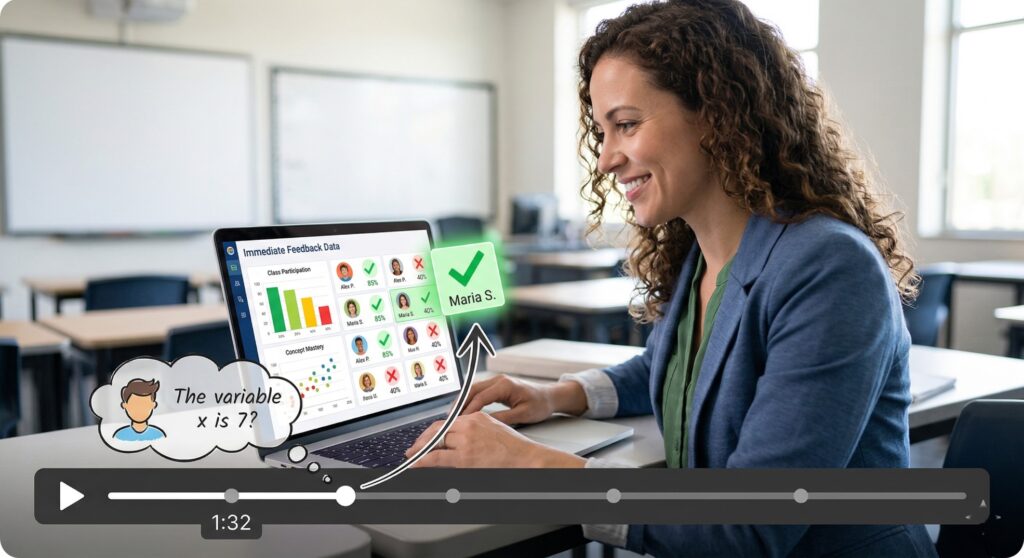
Instead of guessing who understood the material, you embed questions directly into the video at crucial junctures. The video pauses and forces every single viewer to respond before proceeding. This provides you with invaluable, immediate data. If 90% of your students correctly answer a question on one section, you know you can safely move on. But if 60% answer incorrectly, you have instant evidence that you need to re-explain that specific concept before the next class. It turns teaching into a data-driven process.
- Ensuring Completion and Attention
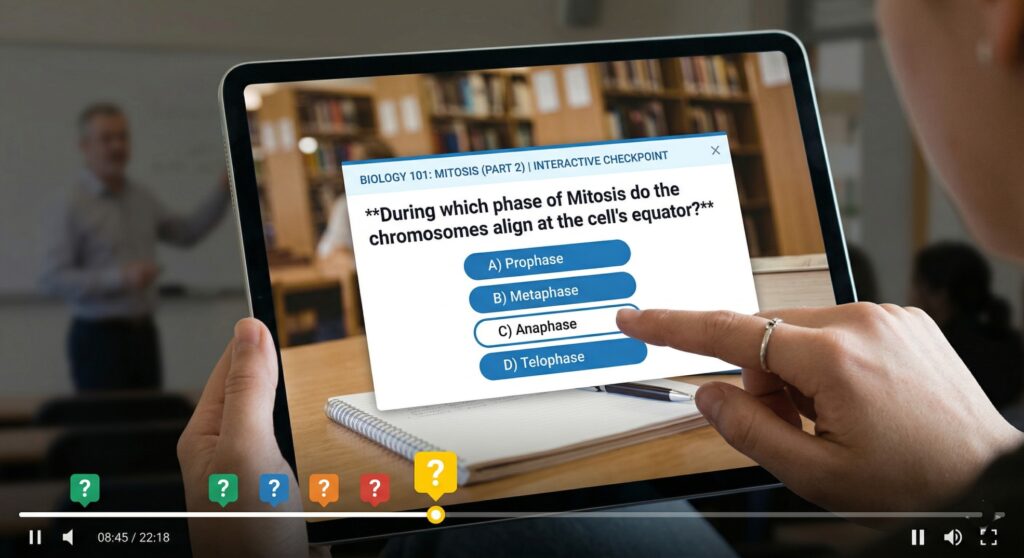
One of the biggest pitfalls of assigned videos is that students often “skip to the end” to mark it complete. By embedding questions throughout the video, you create unavoidable engagement markers. A student must watch and understand the entire content to progress, ensuring they receive the complete lesson, not just a fragmented summary. Quizzes at the very start or very end are easily gamed; questions at the heart of the explanation are where true learning is verified.
- Democratic Opportunity for All Voices
Perhaps the most significant benefit is the way it democratizes participation. The backbencher, the introvert, and the reflective thinker all get the same opportunity to answer without the social anxiety of speaking in front of a whole class. You can even include open-ended questions inviting deeper reflection. These aren’t just checked for “right or wrong,” but give you powerful insight into their deeper processing. Every brain, not just every hand, is activated.
A Holistic Approach: Class and Video in Harmony
This isn’t about replacing your role in the classroom; it’s about complementing it. You still explain concepts in person, but you now have a tool that reinforces those explanations and, crucially, gathers the comprehensive feedback you’ve always missed.
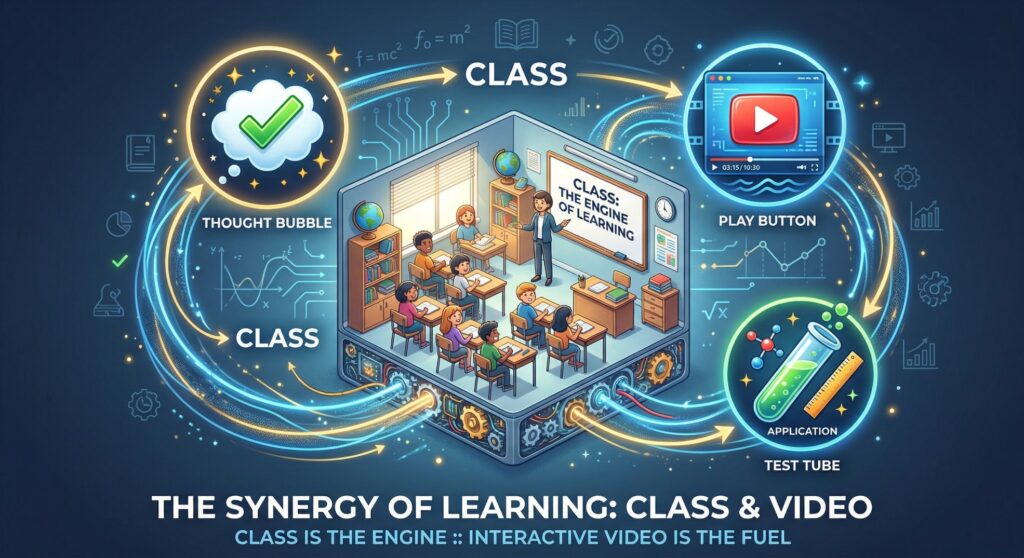
We recommend reinforcing this by making these interactive lessons part of your assessment. Give them a small credit (1 or 2 marks) for completion. This signals that these are not optional “extra resources,” but an essential part of the learning journey.
By taking this approach, we move from “mass learning,” which operates on an average, to “comprehensive based learning,” which targets every individual student, ensuring no one is truly left in the back row. We ensure that our lessons reach not just those who answer, but every brain listening—regardless of their confidence or industrial value sang. It’s time to move beyond the front row and ensure every student learns.
You have read the blog, now we want you to experience the difference between, text only contents, an independent YouTube video and an Interactive Video Lesson with all the cognitive and pedagogy built into.
Now you experience the same content through the Interactive Video Lesson where students can answer questions while learning and also they can leave questions there too with a time stamp.
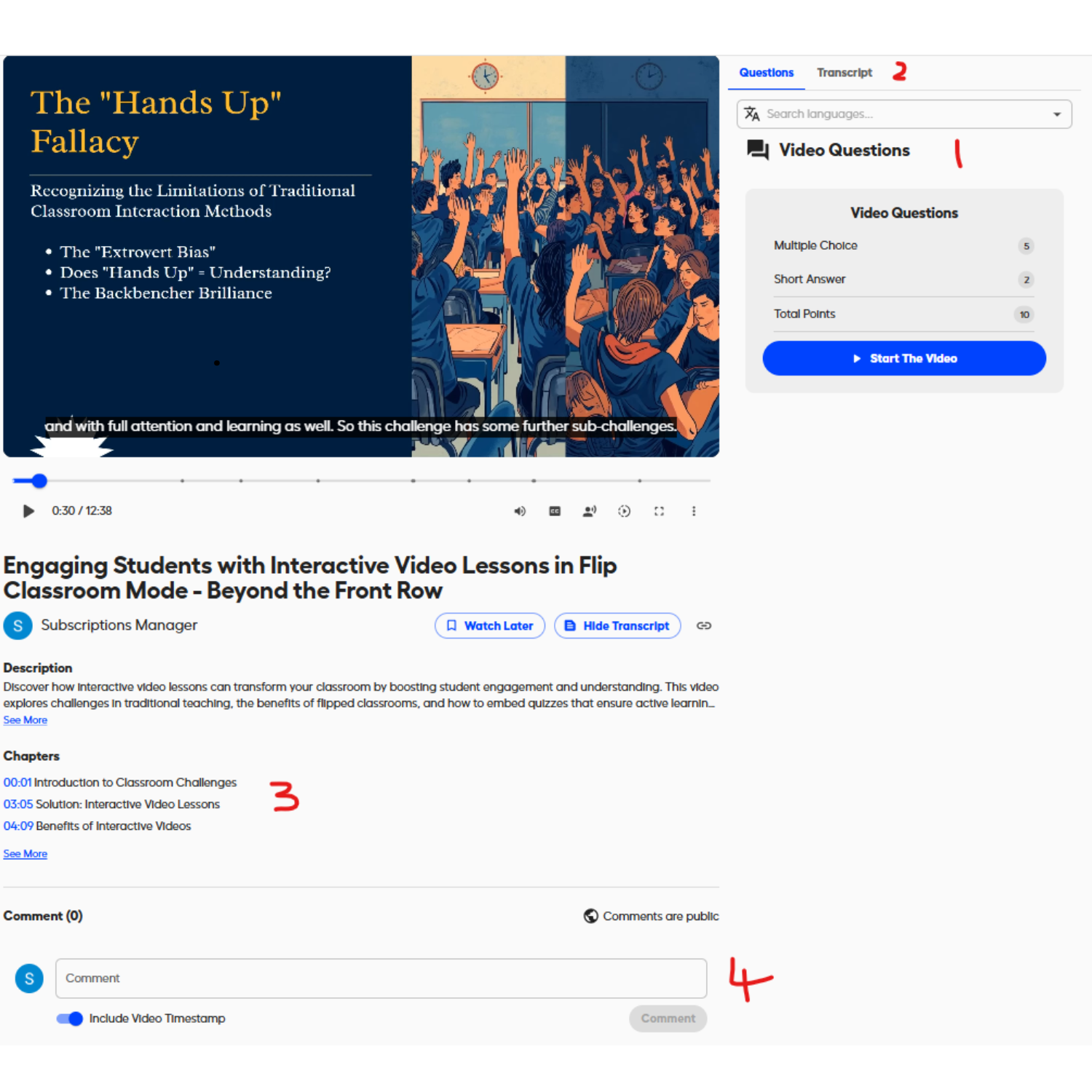
I hope you have enjoyed it and put your thoughts in side lesson. Now you can also share your thoughts in comments below.